
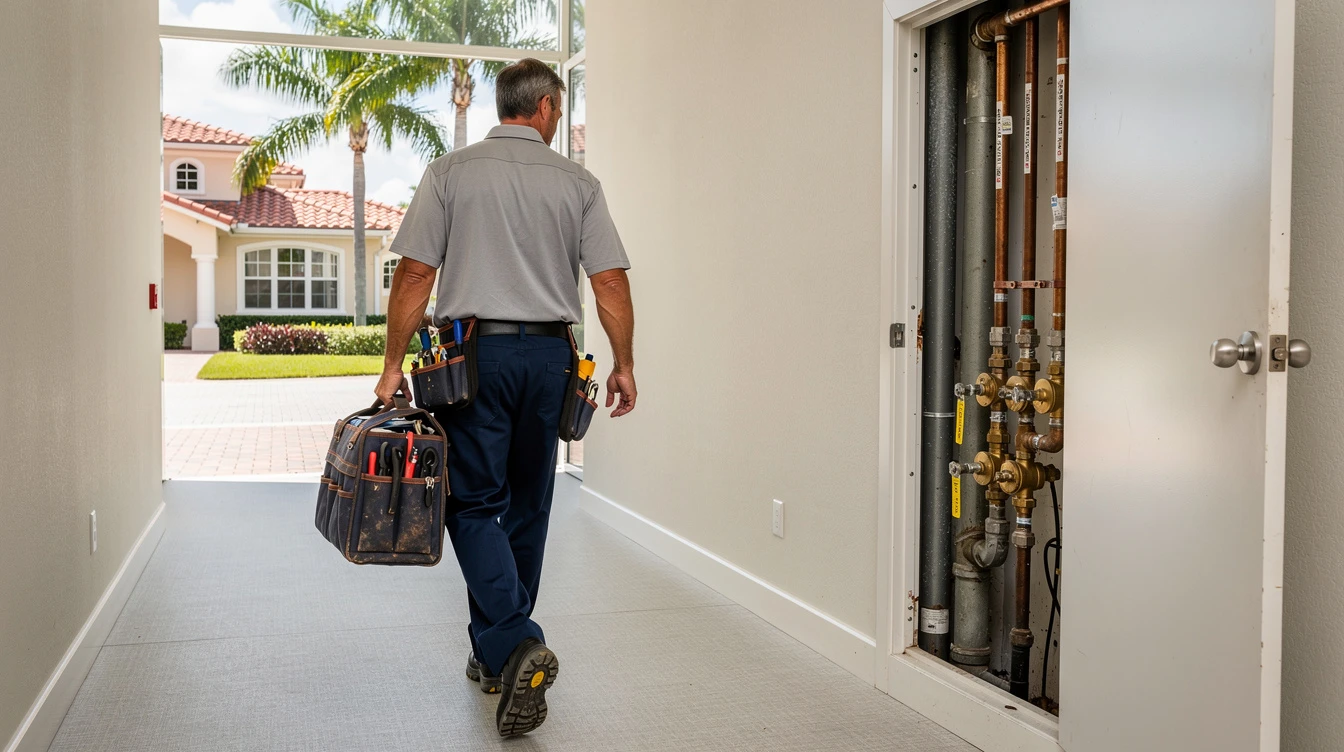
Seven Warning Signs Water Is Leaking Somewhere You Can't See
Most costly leaks never show up as a puddle on the floor. They hide inside walls, under slabs, and behind cabinets, quietly driving up bills and softening the structure of your home. Here's how to catch one before it turns into a renovation project.
Why the quiet leaks are the dangerous ones
A dripping faucet is annoying but harmless: you see it, you hear it, you fix it. The leaks that actually cost homeowners money are the ones with no visible entry point, a supply line failing inside a concrete slab, a fitting weeping behind a shower wall, a joint corroding under a kitchen cabinet. Those can run for weeks before anyone notices, and by the time they're found, the water has already softened wood, fed mold colonies, and quietly padded a few hundred gallons onto every water bill along the way.
Homes in and around Deerfield Beach and Boca Raton share a common vulnerability: slab foundations that run water lines beneath a poured concrete floor. Once a pipe fails down there, the water has nowhere obvious to go, so it spreads sideways through soil and concrete before finally surfacing somewhere unexpected. Add South Florida's humidity and the tendency of older copper pipe to develop pinhole corrosion, and hidden leaks become one of the most common repair calls we take.
Below are the seven signals we tell every homeowner to watch for. Catching even one early can be the difference between a small repair and a full flooring replacement.
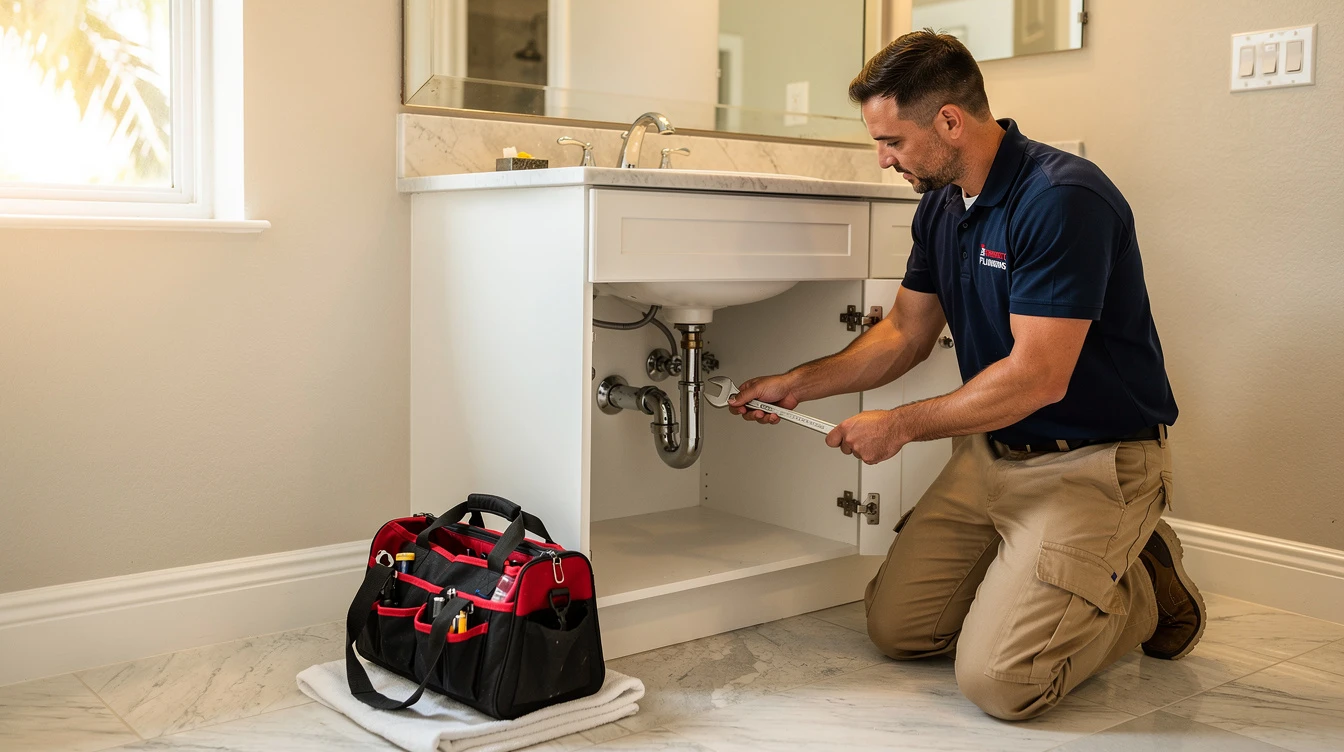
The seven signs worth acting on
Your bill climbed and nothing in the house changed
Water bills fluctuate a little season to season, but a sudden, sustained jump with no new appliances, no houseguests, and no extra irrigation is a strong clue. A hidden leak runs around the clock, so even a slow one adds up over a thirty-day cycle. Pull up your last three statements and line them up. A steady climb that doesn't match your habits is worth investigating before it repeats.
The meter dial won't sit still
This is the quickest check you can run yourself. Shut off every fixture and appliance in the home, then locate your water meter and watch the small dial or leak indicator. If it's still spinning with everything off, water is escaping somewhere between the meter and your fixtures. Record the reading, avoid using water for one full hour, then check again. Any movement confirms an active leak, and our leak detection technicians can trace the exact source without opening walls.
A patch of floor that's warmer than it should be
Walk barefoot across tile or hard flooring on a normal day. If one section feels noticeably warmer than the rest, hot water may be escaping from a slab line beneath that spot. It's one of the more reliable physical clues a slab leak leaves behind.
A musty smell that won't air out
Trapped moisture behind drywall or under cabinets becomes a mold breeding ground fast. A persistent damp or musty odor in a bathroom, closet, or laundry area, especially one that lingers no matter how much you clean or ventilate, usually means water is feeding it from somewhere hidden. If a stain reappears days after you scrub it away, the source is still active, not a leftover from an old spill.
Faucets and showers that suddenly feel weak
Pressure drops when water is escaping a supply line before it ever reaches the fixture. If a shower that used to have decent force now trickles, and clogged aerators aren't the culprit, a leak upstream in the plumbing may be siphoning off the pressure.
A hiss or trickle you can't trace
Turn off the television, the AC, and any background noise, then just listen. A faint hissing or steady trickling sound coming from inside a wall or under the floor, with no fixture running, usually means pressurized water is moving somewhere it shouldn't be.
Soft, cracking, or discolored walls and baseboards
Moisture wicking up from a foundation or seeping through drywall softens whatever it touches. Watch for baseboards that warp or separate from the wall, paint that bubbles, or hairline cracks running along the base of a wall. Drywall that feels cool and slightly spongy to the touch is a near-certain indicator of moisture nearby.
Slabs hide the source, not the damage
Because the pipe sits inside concrete, guessing where to cut is a losing bet. Acoustic and thermal equipment narrow the search to a small target area, so the repair opens one section of floor instead of the whole room.
Finding a leak without demolishing your home
The biggest hesitation homeowners voice is fear of a full slab tear-out just to locate a small pipe failure. That fear is largely outdated. Our team relies on two methods that pinpoint a leak without guesswork.
Used together, these tools shrink the search area down to a few inches rather than an entire floor plan. That means a faster repair, less mess, and a much smaller bill than exploratory demolition. See how the process works on our leak detection page.
Noticed one of these signs?(561) 760-1677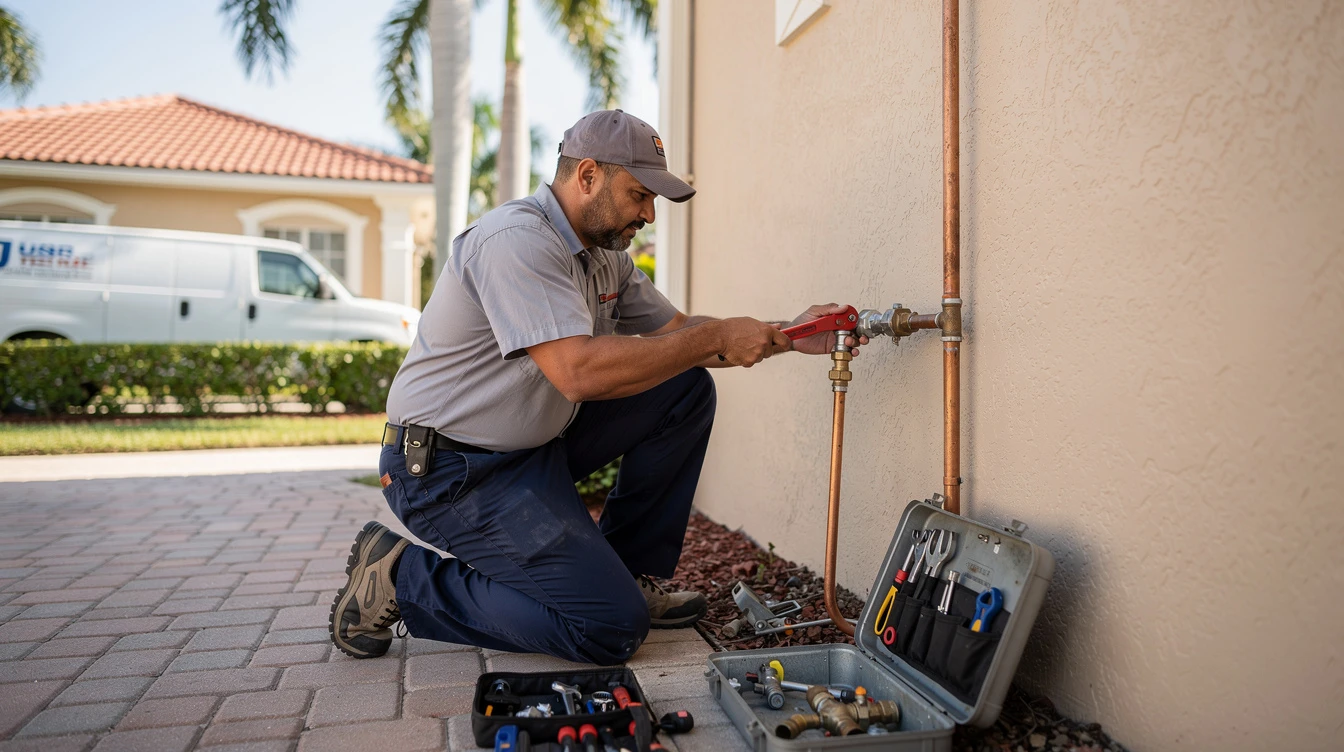
Acoustic listening
Specialized ground microphones pick up the distinct sound signature of pressurized water escaping a pipe, even through concrete.
Infrared imaging
Thermal cameras highlight temperature shifts caused by escaping hot water or spreading moisture, mapping the affected area on screen.
What repeat leaks are really telling you
If this isn't the first pinhole leak your copper lines have developed, treat it as a pattern rather than an isolated event. Corrosion that produces one failure is typically present throughout the whole system. At that stage, patching leak after leak becomes an expensive habit, and whole-home repiping usually saves money over the long run. We'll walk you through both options honestly before you decide.
One common false alarm worth ruling out: a running toilet can mimic the same bill spike as a hidden leak. Before assuming the worst, check our guide on diagnosing a toilet that won't stop running.
Noticed one of these signs?
Call (561) 760-1677 and we'll get a technician out to locate it before it spreads.
Guides and service details
Guides and service details to help you keep small problems from becoming big ones.
All plumbing articles
Browse every guide we've published on drains, water heaters, leaks, and repiping.
Full library →Diagnosing a toilet that won't stop running
A running toilet can waste hundreds of gallons a month. Here's how to test and fix it yourself.
Related guide →Precision leak detection
Acoustic and thermal tools that find the exact source without cutting up your floor.
Our service →Whole-home repiping
Stop chasing pinhole leaks one at a time by replacing aging copper for good.
Our service →Suspect a hidden leak? Let's track it down.
One call gets a technician with acoustic and thermal gear to your address, and the search area narrowed to a few inches instead of a whole room.
Call now · 24/7(561) 760-1677Licensed & insured · FL CFC1433655 · Boca Raton Emergency Plumbing SFL, 1220 Southwest 1st Way, Deerfield Beach, FL 33441.