
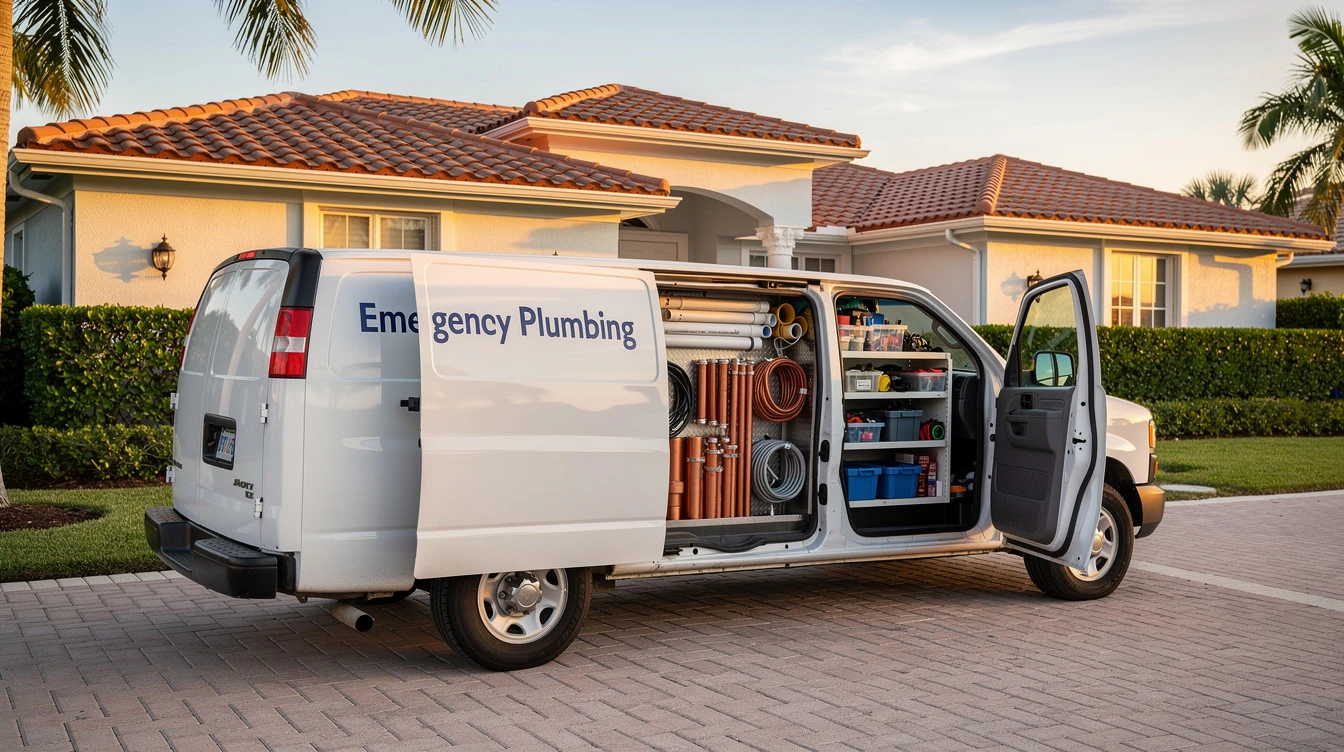
Cold shower in Boca Raton? Fixed fast.
No hot water at 6am, a tank quietly leaking under the garage shelf, or a tankless unit flashing a code nobody understands: our plumbers troubleshoot the actual part before quoting anything, and most repairs wrap up the same visit across Deerfield Beach, Boca Raton and the surrounding coast.
Six symptoms that mean your heater needs attention
A water heater rarely dies without warning. It changes the sound it makes, the color of the water, or how long the hot lasts, weeks before it quits altogether. These are the six patterns we get called about most often, and what each one usually turns out to be.
Water never heats up
A tripped electric element, a dead pilot light, or a burned-out thermocouple on a gas unit will each shut down heat completely, but they present differently to the homeowner. We test the actual component so you aren't paying for a new tank when a small part solves it.
Brown or metallic-tasting water
Once the sacrificial anode rod gets consumed, the bare steel tank begins to corrode and shed rust into your hot water lines. Catching this before the tank walls thin out means a rod replacement can add years of service instead of an emergency call.
Banging, popping or rumbling
Coastal Florida groundwater carries heavy mineral content, and it settles as a hard crust at the tank bottom over time. Steam pockets forming beneath that crust cause the knocking sound, and left alone it forces the burner or elements to work harder than they should.
Standing water around the base
A slow drip from the temperature and pressure relief valve is a straightforward part swap. Moisture weeping from a seam in the tank body itself is a different story entirely and signals the tank has reached the end of its life. We pinpoint which one you're dealing with before anything is quoted.
Hot water fades mid-shower
If hot water quits before the shower does, look at a cracked dip tube, a failed lower heating element, or simply a tank sized too small for how many people are actually using it. Each one has a very different fix, and only an on-site check tells you which applies.
A tankless unit throwing errors
A tankless heater flashing an error display is very often reacting to scale buildup coating its heat exchanger, a direct result of our hard local water supply. A descaling flush typically clears the fault and restores normal operation without replacing any parts.
What actually happens when we show up
Listen first, then test
We start by asking what you've noticed: timing, sounds, water color, anything that's changed. Then we test thermostats, elements, the burner assembly, thermocouple, gas pressure and incoming voltage before touching anything else. Most heaters that seem completely dead just need one component replaced.
Check the tank's true condition
We pull the anode rod to see how much is left, drain a bit of water to gauge sediment volume, and inspect the tank shell for early signs of corrosion around welds and seams. This gives us a factual basis for recommending repair, and we say so plainly if a repair is genuinely the better call.
Fix it or size the replacement
When a repair is the answer, our trucks stock the common elements, valves, thermocouples and rods needed to close it out on the spot. When replacement makes more sense, we walk through capacity: a 40 or 50-gallon tank fits most households, or we scope a tankless conversion if that's the goal.
Handle the paperwork
Replacements typically require a local permit and a follow-up inspection to confirm the install meets current plumbing code. We file the permit, install with a proper expansion tank and shutoff valve, and schedule the inspection so you never have to chase down paperwork yourself.
Purge, fire up and confirm
Whether it's a repair or a brand-new unit, we flush out sediment, refill the tank, purge trapped air from the lines, relight or re-energize the unit, and check temperature and recovery time at an actual faucet before we call the job finished.
Leave you with a warranty and a plan
You'll get written parts-and-labor warranty documentation plus a plain-language reminder about annual flushing, the single easiest habit for stretching a water heater's life in a region with our mineral-heavy water supply.
Tank or tankless: an honest comparison
Warm groundwater and mineral-heavy supply lines change this decision in ways homeowners moving from colder climates rarely expect. Conventional tanks cost less to install and are simple to service later; a 40 to 50-gallon unit handles most families without any adjustment needed. Recovery speed actually works in our favor here, because warmer ambient conditions mean tanks reheat quicker than they would in a colder state.
Tankless units supply hot water on demand and open up floor space, though our humidity and hard water mean annual descaling is not optional, it's routine maintenance. On running costs, tankless can cut standby losses over time, while a tank that's flushed on schedule keeps its efficiency for years without extra investment. Switching to tankless may require a larger gas supply line or updated venting, and we scope that honestly up front rather than surprising you mid-install.
Tell us what it's doing(561) 760-1677What actually moves your quote
We don't like giving numbers over the phone with no diagnosis behind them, so here's exactly what changes your final cost. We walk through every applicable item on site before you sign off on anything, no exceptions.
Component repair versus complete tank swap
One failed element or thermostat is a very different ticket than lifting out a tank that has weeping seams.
Capacity and fuel source
Tank size for your household, and whether the unit is gas-fired or electric, both change parts and labor.
Conventional tank versus tankless conversion
A tankless switch can call for gas line sizing or venting changes, which we scope before quoting.
Permit and inspection fees
Municipal charges for bringing the setup up to current code, passed through at cost.
Expansion tank and new shutoff
Code-required additions on most replacements, itemized rather than buried in a lump sum.
Access and sediment load
A tight closet, garage or attic position adds labor time, as does years of built-up sediment to flush.
Coverage across the South Florida coast
Palm Beach County
Broward County
Miami-Dade County
Other work we take on
Water heater replacement
When the anode is gone and the shell is corroding, a permitted install instead of another patch.
See replacement & installation →Leak detection
For the damp patch near the tank that turns out to be a supply line, not the heater.
See leak detection →Whole-home repiping
If the rust in your hot water is coming from the pipes rather than the tank.
See repiping →Emergency plumbing
A gas smell near the heater means everyone steps outside and calls from the yard.
See emergency plumbing →Drain cleaning
The other half of the same mineral-heavy water: scale on the drain side.
See drain cleaning →What clients say after we've left
Our tank started leaking the night before we had houseguests arriving. They diagnosed it as a bad seam, walked me through options on the spot, and had a new unit installed and permitted before our guests even landed. Zero drama.
Nathan C. · Boca Raton
I was bracing for a full replacement quote but the tech found a failed lower element and swapped it in about forty minutes. He was upfront that the tank itself still had plenty of life left, which I really appreciated.
Alicia F. · Deerfield Beach
They talked us through the gas line upgrade needed before switching to tankless, filed the permit, and coordinated the whole inspection. We finally have hot water on demand and got our closet space back.
Harold D. · Pompano Beach
Rusty water had us worried something was seriously wrong. Turned out to be a spent anode rod. They swapped it, flushed years of sediment out, and set a reminder for us to have it checked again next year.
Yamila S. · West Palm Beach
Water heater repair, answered
Is it cheaper to repair mine or start fresh with a new unit?
It comes down to what's actually broken. A failed thermostat, element, thermocouple or relief valve is nearly always a straightforward repair on a tank that's otherwise sound. Once the anode rod is fully used up and corrosion has started eating into the tank shell, or if you're seeing a seam leak, replacement becomes the smarter money. We check the anode and inspect for corrosion before recommending anything, so the call is based on what we actually find and not a guess.
Why does my water heater seem to wear out faster here than up north?
Our local groundwater carries a heavier mineral load than a lot of other regions, and it settles as sediment inside conventional tanks faster than you might expect. That accumulation accelerates corrosion at the tank bottom and puts extra strain on heating elements. An annual flush plus replacing the anode rod once it's spent can meaningfully stretch how long your unit lasts. Tankless models face the same mineral challenge and need scheduled descaling to keep performing well.
Do I actually need a permit just to swap out a water heater?
In most South Florida municipalities, yes: a replacement requires a permit and a follow-up inspection confirming the new install meets current code, which usually means adding a thermal expansion tank, an accessible shutoff valve, and correct strapping or venting depending on the unit. We file the permit, complete the install to code, and schedule the inspection ourselves so this stays off your plate. It also protects you if the home insurance carrier or a future buyer ever asks for documentation.
Would switching to a tankless system actually be worth it for us?
Tankless makes sense if your priority is endless hot water and reclaiming space in a closet, garage or utility room, and it can also reduce standby energy losses over time. The trade-off is up-front complexity: many gas tankless units need a larger gas line and updated venting, plus annual descaling to hold up against our hard water. If your household is content with a properly sized 40 or 50-gallon tank, sticking with conventional and maintaining it well is often the more cost-effective route. We'll scope both paths honestly and let you weigh it.
Realistically, can this get done in one visit?
Most repair calls close out the same visit because our trucks carry the common elements, thermostats, thermocouples, valves and anode rods that fix the majority of issues we see. Standard tank replacements at 40 or 50 gallons are also frequently finished same-day. A tankless conversion, or any job that needs new gas line sizing or venting work, can take a bit longer to do properly and get permitted. Give us a call and we'll be straight with you about the timeline for your exact situation.
Let's get your hot water back.
Whether it's swapping one part, replacing an anode rod and flushing the tank, or a full permitted install, a licensed plumber is standing by across Palm Beach, Broward and Miami-Dade. We diagnose before we quote, we quote before we work, and everything comes with a written warranty.
Call now · 24/7(561) 760-1677Licensed & insured · FL CFC1433655 · Boca Raton Emergency Plumbing SFL, 1220 Southwest 1st Way, Deerfield Beach, FL 33441 · Written warranty on every job.