
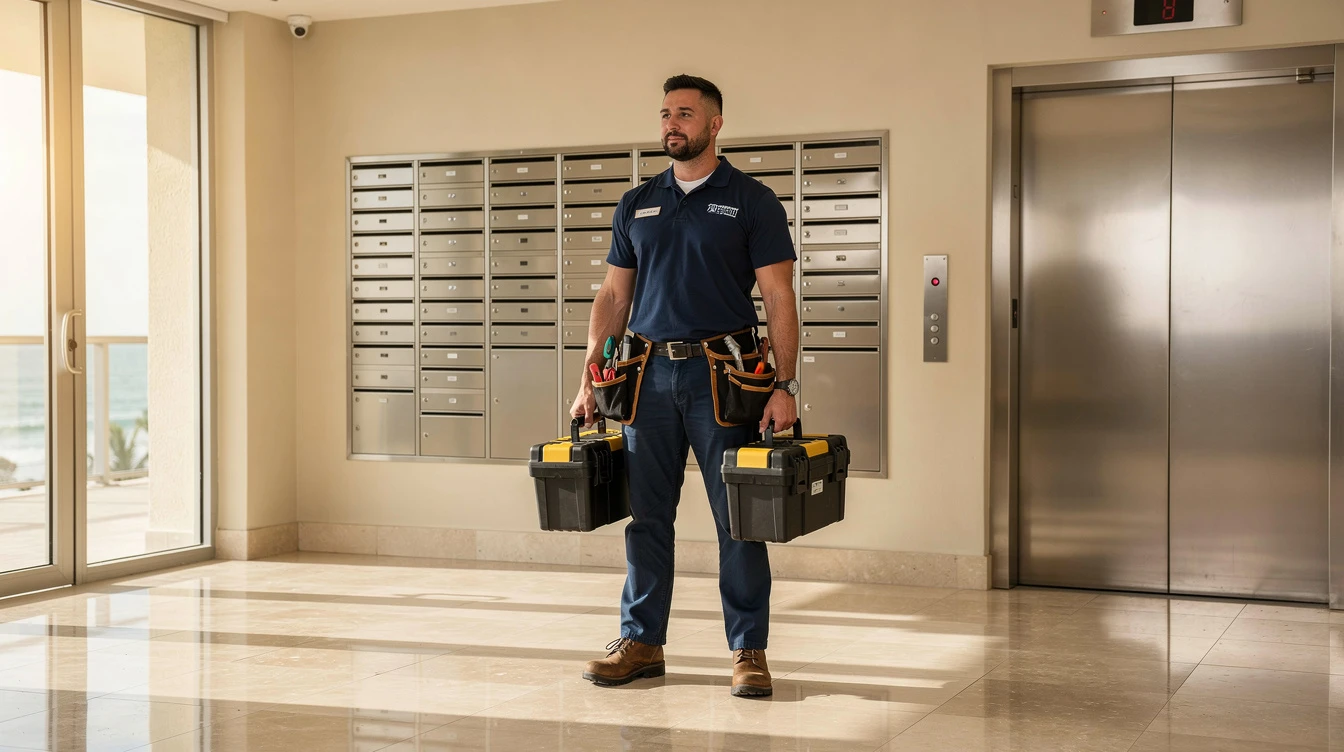
Sewer line repair in Boca Raton, diagnosed on camera first.
A recurring backup, a soggy patch of lawn, or slow drains all through the house usually trace back to one thing underground. We run a camera down the line first so the fix matches what's actually wrong, not a guess. Working out of Deerfield Beach and covering Palm Beach, Broward and Miami-Dade counties.
What a failing sewer line usually looks like
Almost every sewer call starts as a symptom indoors that has nothing obviously wrong with it. These are the six patterns that most often turn out to be one fault underground, and the reason we put a camera in the line before quoting anything.
Backups every few weeks
If a plunger or a bottle of drain cleaner keeps buying you a week or two before the same fixtures clog again, the trouble is further down the line than any single trap.
Gurgling toilets when you run water
A toilet that bubbles or gurgles right as the washing machine drains is telling you air is trapped somewhere in the main line, usually behind a partial blockage.
Roots working into an old joint
Mature oaks and ficus in older Palm Beach and Broward neighborhoods send fine roots toward the moisture inside a pipe joint, then thicken until they choke the line.
A sagging section holding water
Loose, sandy soil common along the coast lets a section of pipe settle over time. Waste pools in that low spot instead of moving on, and it re-clogs on a schedule.
Old cast iron flaking from the inside
Cast iron laid before the mid-1970s corrodes from the inside out. On camera it shows up as rust flakes and rough scale that has narrowed the pipe to a trickle.
Damp ground or odor near the cleanout
A patch of grass that stays wet with no rain, or a sewage smell that lingers near the cleanout, often points to a crack leaking below grade before you ever see it indoors.
From the first call to a passed inspection
Camera down the cleanout
A push camera goes in and we watch the feed with you in real time, then a locator marks the exact depth and yard position of whatever we find.
Name the actual problem
Roots, a sag, a corroded stretch or a separated joint: we point to it on the screen and explain how much of the run is affected before talking price.
Firm quote and permit pull
You get one written number before we start. If your city or county requires a plumbing permit for the scope of work, we pull it under our license and set the inspection date.
Open the ground carefully
Sod comes up in sections and gets set aside, not tossed. We keep the excavation as narrow as the repair allows and shore the trench so the dig stays safe and contained.
Cut out and rebuild the section
Damaged pipe comes out and gets replaced with new Schedule 40 PVC set at the correct slope, then we run the camera back through before anything gets covered.
Inspection and yard reset
The county inspector signs off, we compact and backfill in layers, and the sod goes back where it came from. You keep the passed inspection paperwork and our written warranty.
One bad joint or one bad line: the footage tells us which
Some sewer failures live in a few feet of pipe. Others run the length of the yard. We don't decide which one you have until the camera has been down the line and we've watched the recording together. If it's a single crack or a joint that has pulled apart in otherwise solid pipe, we cut in, replace that short run, and confirm the fix on camera before backfilling.
If the footage shows scale along most of the line, several low points, or old clay that's crumbling at multiple joints, we'll tell you plainly that a spot fix would only delay the next call. Either way, you see what we see and choose your repair with real information instead of a sales guess.
Book the camera visit(561) 760-1677Why one sewer quote isn't like the next
Two homes with the same symptom can need very different repairs. Here's what actually shifts the number once we've watched the footage.
How deep and how far the fault runs
A shallow spot near the cleanout is a smaller job than a deep failure mid-yard.
One section versus the whole run
A spot repair on a short stretch is a fraction of relaying the full line.
What's sitting above the pipe
Open lawn digs quick; pavers, a driveway or a mature tree over the line adds time and restoration cost.
Age and material of the pipe
Brittle clay or corroded pre-1975 cast iron tends to crumble past the original problem spot once opened.
Local permit requirements
Palm Beach and Broward municipalities differ on what triggers a permit and inspection.
How much needs to be put back
Sod, concrete or driveway patching after the dig is closed out gets added into the final number.
Based in Deerfield Beach, running across three counties
Palm Beach County
Broward County
Miami-Dade County
Other work we take on
Trenchless sewer repair
When the line can be rebuilt from the inside instead of opening the whole yard.
See trenchless repair →Cast iron replacement
For the pre-1975 drain lines the camera shows flaking and narrowed to a trickle.
See cast iron replacement →Hydro jetting
Root hair and scale sheared back to the pipe wall, with footage before and after.
See hydro jetting →Drain cleaning
The first step when the problem turns out to be a blockage, not the pipe.
See drain cleaning →Emergency plumbing
Sewage surfacing indoors gets a truck tonight, not a scheduled slot.
See emergency plumbing →What neighbors are saying
I was braced for a full yard tear-up. The camera showed one bad joint near the cleanout instead, so that's all they touched. Saved me thousands and my landscaping is untouched.
Marisol P. · Boca Raton
Old cast iron under my kitchen finally gave out. They pulled the permit themselves, met the inspector, and I never had to make a single call to the city. Line runs quiet now.
Kevin O. · Deerfield Beach
They set the sod aside before digging and put it right back after. You'd never know they were out there except that the drains work perfectly again. Fair price too.
Naomi B. · Delray Beach
Our tub backed up every couple months for a year. Turned out there was a low spot in the line holding water and they showed it to me right on the screen. Replaced that stretch and it's been fine since.
Douglas F. · Pompano Beach
Sewer repair, answered straight
What does the camera actually tell you?
We feed a self-leveling camera in from the cleanout and watch the run all the way to the connection point. Roots at a joint, a sagging low spot, corroded old iron, or a full separation each look different on screen, and we point them out live rather than describing them after the fact. A locator on the camera head also marks the depth and exact yard position of the fault so any digging goes straight to the target. We keep the recording so the diagnosis is documented, not just described.
Once roots are cleared, do they just come back?
Cutting roots out without fixing the opening they came through is a short-term fix, and they'll be back within a season or two. Our repair replaces the actual cracked or open joint with sealed pipe, closing off the entry point rather than just clearing what's already grown in. If a tree directly over the line is likely to keep sending roots toward the new pipe, we'll flag that risk honestly. The written warranty covers the section we replace.
Who deals with the permit and the inspection?
We do. Sewer repairs that open the ground typically need a plumbing permit, and the specific rules vary between Palm Beach and Broward municipalities. We pull that permit under our own credentials, schedule the required inspection, and are on site when the inspector comes through. You keep the passed inspection record for your files. Skipping that step might save a day, but it can create real problems if you ever sell the home.
How long is my yard going to be torn up?
A short, shallow spot repair often wraps in a single day: dig, replace, camera check and backfill. Longer or deeper runs, or a repair under a driveway or dense landscaping, can stretch across a few days once you count restoration. Permit timelines in some cities add a scheduling step outside our control. When we hand you the quote, we also give you a realistic timeframe based on what the camera actually showed, not a standard estimate.
Should I do a spot repair or replace the whole line?
The camera decides, not a quote sheet. If the rest of the pipe looks structurally fine and the problem is one joint or one crack, a spot repair is the right call and we'll say so plainly. If the footage shows corrosion, sagging or separation spread across most of the run, replacing one spot just means calling us back in six months for the next section. We walk you through exactly what the video shows before you commit either way.
Get eyes on the line before you spend a dime.
A camera inspection tells us whether you need a small spot fix or a full section replaced, and we'll tell you straight either way. Permits, the dig, the rebuild and putting your yard back together are all handled in-house, with a written warranty on the repaired section, across Palm Beach, Broward and Miami-Dade counties.
Call now · 24/7(561) 760-1677Licensed & insured · FL CFC1433655 · Boca Raton Emergency Plumbing SFL, 1220 Southwest 1st Way, Deerfield Beach, FL 33441 · Warranty on the repaired section.