
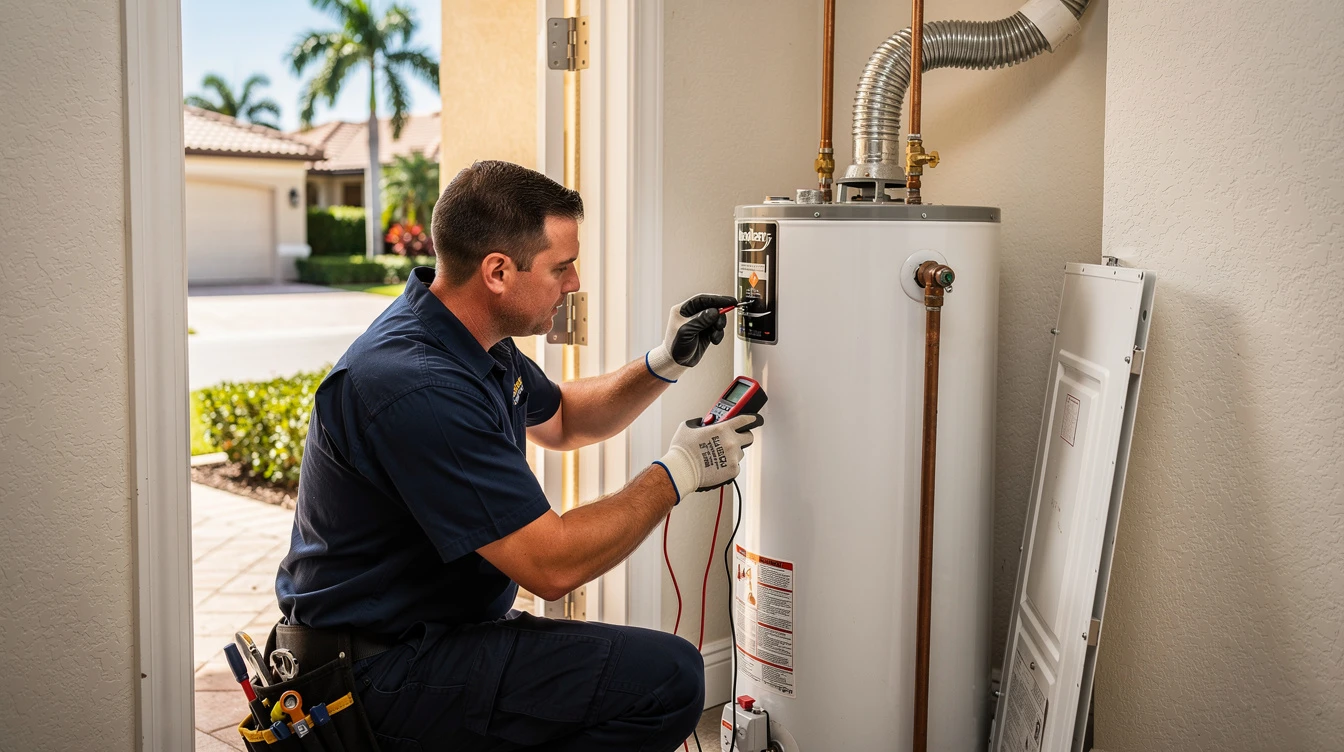
Old pipes failing in Boca Raton? We replace the whole system.
Discolored water at the tap, pressure that keeps sliding, or a pinhole leak that reappears a few months after the last one got patched: these are the signs of supply lines that have simply worn out. Our crews strip out the old galvanized, polybutylene or failing copper and install a full new system in copper or PEX, matched to your home and budget.
Six warning signs your supply lines are done
One leaking fitting is a repair. Three leaking fittings in one year from the same section of pipe is a pattern, and patterns don't stop on their own. Below are the symptoms we hear most often from South Florida homeowners right before they decide to repipe, along with what each one usually means for the pipe underneath your walls and floors.
Water runs brown or yellow
If the first draw of the day comes out discolored and clears up after running for a minute, the interior wall of an old galvanized pipe is rusting from the inside. That rust is flaking into your water supply, and no faucet filter addresses corrosion happening inside the pipe itself. Replacement is the only permanent fix.
Showers slow to a trickle
Interior scale buildup narrows the usable diameter of old pipe over decades until even a single running fixture drops pressure everywhere else in the house. New copper or PEX opens the flow path back up, and most homeowners tell us the shower feels stronger than it has since they moved in.
You've patched more than one pinhole
A single pinhole leak in copper is often a fluke. A second or third pinhole in a different room within a year or two tells you the pipe wall has thinned across the whole system, not just at that one fitting. At that point, repairing spot by spot costs more over time than replacing the run once.
Your home still has polybutylene
Gray plastic supply lines were common in South Florida construction through the late 1980s and into the early 1990s, and the fittings on that material are prone to sudden, no-warning failure. West Boca is the county's epicentre: Boca Del Mar, Boca West and Sandalfoot Cove went up squarely inside the 1978 to 1995 window, and the 33433 alone holds more than 12,500 homes built in the 1980s. Many carriers in this region now decline to renew coverage on homes with polybutylene still in the walls.
A warm, damp spot on the floor
A section of tile or carpet that stays warm or damp, plus the sound of water moving when every fixture is off, usually points to a leak in a line running under the slab. Rather than breaking up the foundation to chase it, we can reroute the supply above the slab through walls and attic during a repipe.
Your policy renewal is at risk
Underwriters across South Florida are increasingly asking for plumbing age and material during four-point inspections, and older galvanized or poly systems are a common reason for a non-renewal notice. A permitted, inspected repipe gives you paperwork that satisfies most carriers and often keeps your premium from climbing.
From first walkthrough to closed-out permit
On-site walkthrough
We inspect your home fixture by fixture, note the routing of every existing line, and run leak detection if a hidden or slab leak is suspected. You leave that visit with a written scope and a firm number, not a guess.
Permit filing and site prep
We file the permit with your city or county before any tool touches your walls, then protect flooring and furniture and mark the specific access points we'll need to reach the runs. In Boca Raton the city's Building Department requires that permit before walls are opened for a repipe, so this step is not optional.
New lines go in
We run copper or PEX through attic space and interior walls to every fixture, tying in the new system while capping off the old one. We split large homes into zones so we can restore water to the rest of the house while a section is offline.
Pressure test before closing anything
Every joint is pressurized and held under test before a single access opening gets closed. We want any weak fitting to show itself now, while it's still easy to reach, not months later behind fresh drywall.
City inspection and sign-off
We schedule and stand by for the municipal inspector, walk them through the work, and get the permit closed out with an official pass, the record you'll want on file for any future sale or insurance review.
Patch, clean up and hand off paperwork
We close every access opening we made, sweep and wipe down the work areas, and leave you with a written warranty on both pipe and labor along with copies of the permit and inspection record.
Which pipe material fits your house?
Copper has decades of proven service, resists UV and fire exposure better than plastic, and is what many owners expect to see on an appraisal or resale inspection. PEX flexes around obstacles with far fewer joints, tends to handle our region's mineral-heavy water with less scale buildup over time, and often lets us route lines with smaller, fewer access openings, which usually means less drywall repair when the job is done.
Neither choice is automatically better for every home; the right one depends on your layout, your water, and how long you plan to own the property. During your walkthrough we'll count fixtures, look at your existing routing, and lay out the tradeoffs plainly so you can choose with confidence. If drains rather than supply lines are the aging half of your plumbing, ask us about cast iron pipe replacement while we're on site.
Book the walkthrough(561) 760-1677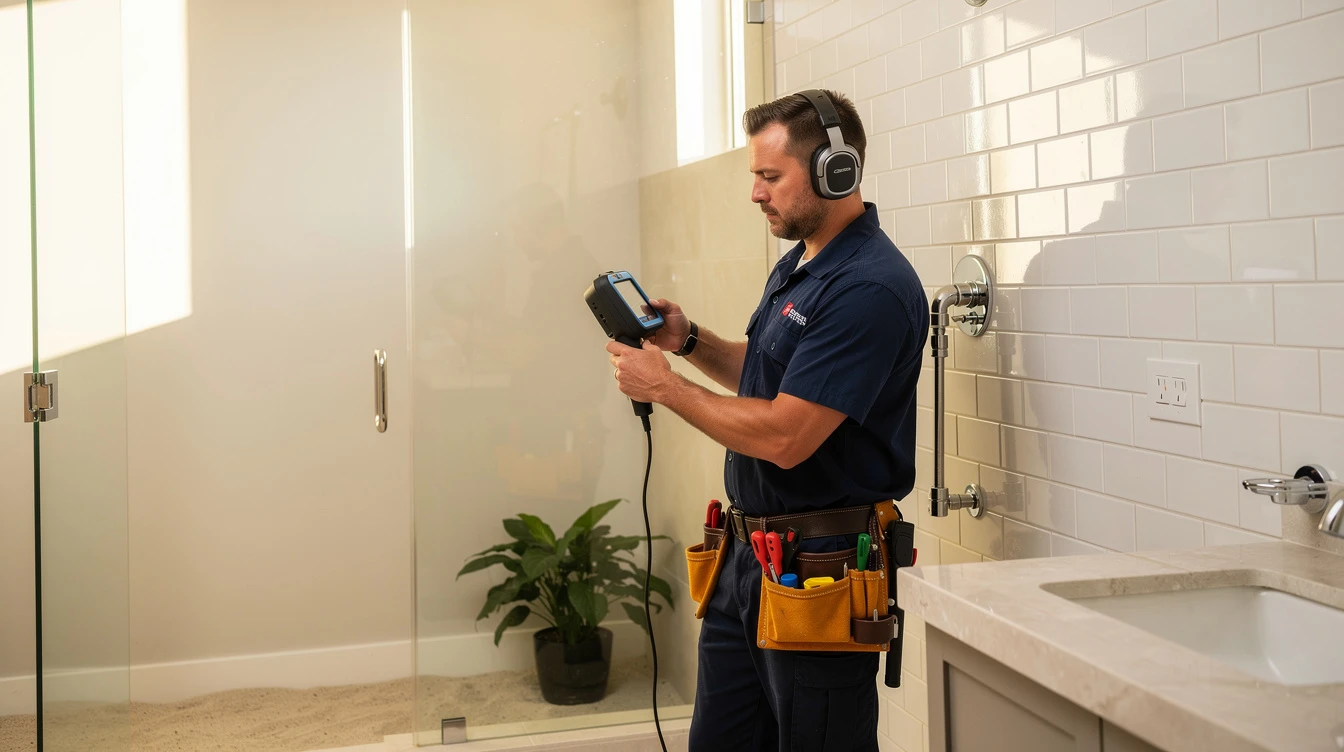
What actually drives a repipe estimate
Homeowners are usually surprised how much two seemingly similar houses can differ in repipe cost. It comes down to a handful of concrete variables, not guesswork, and we walk through every one of them with you before you sign off on anything.
Fixture count
A one-bath condo has far fewer runs to replace than a five-bathroom single-family home, and pricing scales with that count.
Copper versus PEX
Material cost and labor hours differ between the two, and we'll show you both numbers side by side.
One story or two
Slab-on-grade single-story homes are typically the most straightforward; two-story houses need vertical chases through walls, which adds time.
How reachable the runs are
An unfinished attic is quick to work in; lines buried behind tile walls or built-ins take longer to access safely.
Drywall repair scope
Every access opening we plan to close is spelled out in the written estimate before work starts, so there's no ambiguity later.
Permit and inspection fees
These are municipal charges, not markup, and they're what makes the finished job legally documented for insurance purposes.
Serving Palm Beach, Broward and Miami-Dade
Palm Beach County
Broward County
Miami-Dade County
Other work we take on
Leak detection
Pinpointing the slab or wall leak before anyone decides what to open.
See leak detection →Cast iron replacement
The drain side of the same house, common in the older blocks east of I-95.
See cast iron replacement →Water heater replacement
The natural moment to swap an aging tank, while the supply lines are already open.
See water heater replacement →Emergency plumbing
For the polybutylene fitting that lets go without warning at two in the morning.
See emergency plumbing →Sewer line repair
When the problem turns out to be downstream of the fixtures, not upstream.
See sewer line repair →Real repipe jobs, in their own words
Our shower had gotten so weak my kids were complaining. Turned out our whole house still had the original galvanized from the 1970s. The crew laid out copper versus PEX pricing clearly, we picked PEX, and the job was finished in four days with water back on every single night.
Carla D. · Boca Raton
Our insurance company sent a letter about polybutylene pipe and gave us a deadline. This team scheduled fast, filed the permit, and got the inspection passed before the renewal date. The paperwork they handed over was exactly what our agent needed.
Dennis W. · Deerfield Beach
We'd fixed two pinhole leaks ourselves already and knew a third was coming. They walked the house, counted every fixture, and gave us one flat number in writing before opening a single wall. No changes to that number when the job wrapped.
Lourdes N. · Pompano Beach
A warm patch on the kitchen floor and a water bill that had doubled turned out to be a slab leak. Instead of tearing into the foundation, they rerouted the whole supply above the slab. Less mess than I braced myself for, and every access hole they made was patched cleanly.
Desmond L. · Fort Lauderdale
Answers before you book
How many days will my home be without full water service?
Most single-family homes in our service area finish in two to five days depending on fixture count, whether the home is one story or two, and how easily we can reach the runs through attic and wall cavities. We never leave a home fully without water overnight; we zone the work so at least part of the system stays live while another section is being replaced, and we restore full service each evening before we leave the site.
Is PEX actually as durable as copper long term?
Yes, when installed to code with the right fittings, PEX has a solid decades-long track record in residential plumbing and it's approved throughout Florida for potable water. It's less prone than copper to the pinhole corrosion caused by aggressive local water chemistry, and its flexibility means fewer joints in a typical run, which is usually where leaks start. Copper still has advantages in exposed or high-heat locations. We'll tell you honestly which material suits your specific home rather than pushing whichever costs us less to install.
How much drywall damage should I expect?
We plan every access opening before the walkthrough is over and put the exact count in your written estimate, so there are no surprise holes appearing mid-job. We patch and finish every opening we make as part of the standard scope. Texture matching and paint touch-up on the patched areas are typically a separate line item, and we'll flag that clearly up front so you can budget for it or handle it yourself if you prefer.
Will the permit and inspection be handled for me?
Yes, we file the permit before starting and coordinate the municipal inspection once the new lines are pressure-tested and ready to be closed up. That inspection sign-off is the official record showing your plumbing meets current code, and it's the exact document most insurance carriers want on file when a home has had older galvanized or polybutylene lines replaced. We hand you copies of everything once the permit closes.
My four-point inspection flagged old plumbing: what now?
This is one of the most common reasons homeowners in our service area call us. A four-point inspection flags aging galvanized or polybutylene plumbing because carriers consider it a rising claim risk, and many will non-renew or raise premiums until it's addressed. A permitted, inspected repipe with copper or PEX documents the fix in a way underwriters accept, and it typically stops the leak risk for good rather than just satisfying paperwork.
Stop patching pipes that keep failing.
Whether it's rusting galvanized, risky polybutylene, or copper that keeps springing pinholes, our crew replaces the whole system with new copper or PEX: filed permit, passed inspection, and a written warranty on both pipe and labor. Licensed and insured, serving Palm Beach, Broward and Miami-Dade counties.
Call now · 24/7(561) 760-1677Licensed & insured · FL CFC1433655 · Boca Raton Emergency Plumbing SFL, 1220 Southwest 1st Way, Deerfield Beach, FL 33441 · Permit and inspection handled for you.