
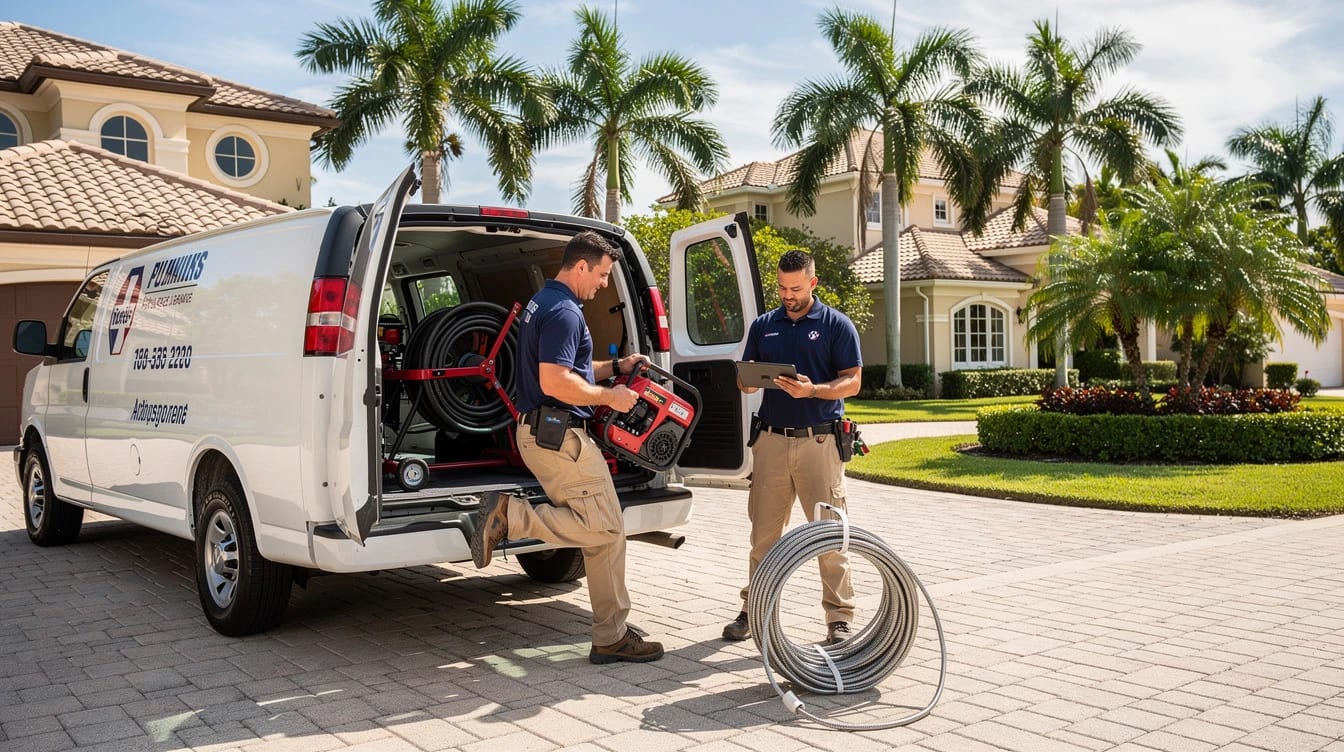
Leak detection in Boca Raton: track down the drip before the drywall rots.
Water always finds the path of least resistance, and by the time you see a stain or smell mildew, it's already been running for weeks. Our crew carries acoustic listening gear, electronic tracing tools and infrared cameras to isolate the source before anyone reaches for a hammer, serving homes across Palm Beach and Broward counties.
Six clues that a pipe is failing out of sight
A concealed leak announces itself indirectly: on the bill, underfoot, in the air. These are the six clues that most often bring us out, and any one of them is enough reason to have the line located before the damage spreads.
A utility bill that jumped
Nobody in the house changed their habits, yet the water bill climbed noticeably higher two billing cycles in a row. A concealed line under the slab or behind a wall can leak around the clock without anyone noticing until the invoice arrives.
Tile or wood that's changed temperature
A patch of tile that stays noticeably warm underfoot usually points to a hot-water supply line leaking beneath the slab. Cool or spongy spots, cupped wood planks, or laminate bubbling at the seams tell the same story from the cold-water side.
A hiss with everything off
Stand quietly near a wall or floor at night and you hear a faint trickling or hissing sound even though every faucet is shut. Pressurized pipes make a distinct sound right at the break point, which is precisely what our acoustic sensors are built to catch.
A musty smell with no visible cause
In this climate, humidity plus a slow leak equals mold behind drywall within days, not weeks. If a room or closet smells stale and earthy without any obvious source, that odor almost always leads us straight back to a hidden supply or drain line.
Showers that suddenly went weak
A small hole in aging copper or galvanized pipe bleeds off pressure long before it becomes an obvious flood. If your once-strong shower now sputters or faucets take longer to fill a glass, water is likely escaping somewhere along the run.
Your meter kept spinning
You shut off every fixture in the house, walked out to the meter, and watched the little leak-indicator dial keep turning anyway. That's about as clear a confirmation as you'll get on your own, and it's exactly where our locating process picks up.
A methodical search, not a lucky guess
Confirm and isolate
We open with a static pressure test to confirm there's a real supply-side leak and rule out irrigation lines, the pool fill, or a slow drain issue that mimics the same symptoms. Splitting hot from cold at the manifold quickly tells us which system we're chasing.
Grid the slab by sound
Amplified ground microphones let us walk the floor in a grid pattern, listening for the distinct frequency pressurized water makes as it escapes through concrete and soil. We mark every point where the signal is strongest before moving to confirmation.
Trace the pipe route
On stubborn cases we introduce a safe tracer signal onto the line and follow it with electronic locating equipment to map the exact pipe path under the floor. Cross-checking this route against the acoustic hit keeps us from opening the wrong section.
Cross-check with infrared
A thermal camera picks up the faint temperature shift a leak leaves behind in flooring and drywall. A hot-water line glows warm under tile, while a cold moisture plume behind a wall shows as a cooler shadow, giving us a third confirmation on the same spot.
Mark it and write it up
Once we're confident in the spot, we mark it on the floor or wall, photograph our instrument readings, and put together a written findings summary. If a claim is on the table, this record gives your adjuster the location, likely cause and evidence in one place.
Walk through the fix options
With the leak pinpointed, we lay out the repair paths in plain terms: a targeted spot repair through a small opening, rerouting the line above or around the slab, or a broader repipe if the rest of the system is also aging out. You pick the direction before a single cut is made.
A quick check you can run before you call
You can confirm whether a leak is real in under half an hour, no tools required beyond your water meter. Shut off every faucet, the icemaker, the washing machine supply, and confirm no toilet is mid-refill. Locate the meter, usually at the curb or in a small ground box near the property line, and write down the exact reading along with the position of the small leak-indicator triangle or sweep hand.
Wait 30 minutes without using a drop of water anywhere in the house, then check the reading again. Any movement at all means water left the system somewhere between the meter and your fixtures. To narrow down whether it's inside the house or on the yard-side supply line, close your main shutoff valve and repeat the test: if the meter goes still, the leak is inside; if it keeps ticking, the break is between the meter and the house. Whatever you find, bring us the numbers and we'll pick up the search from there.
Tell us what the meter did(561) 760-1677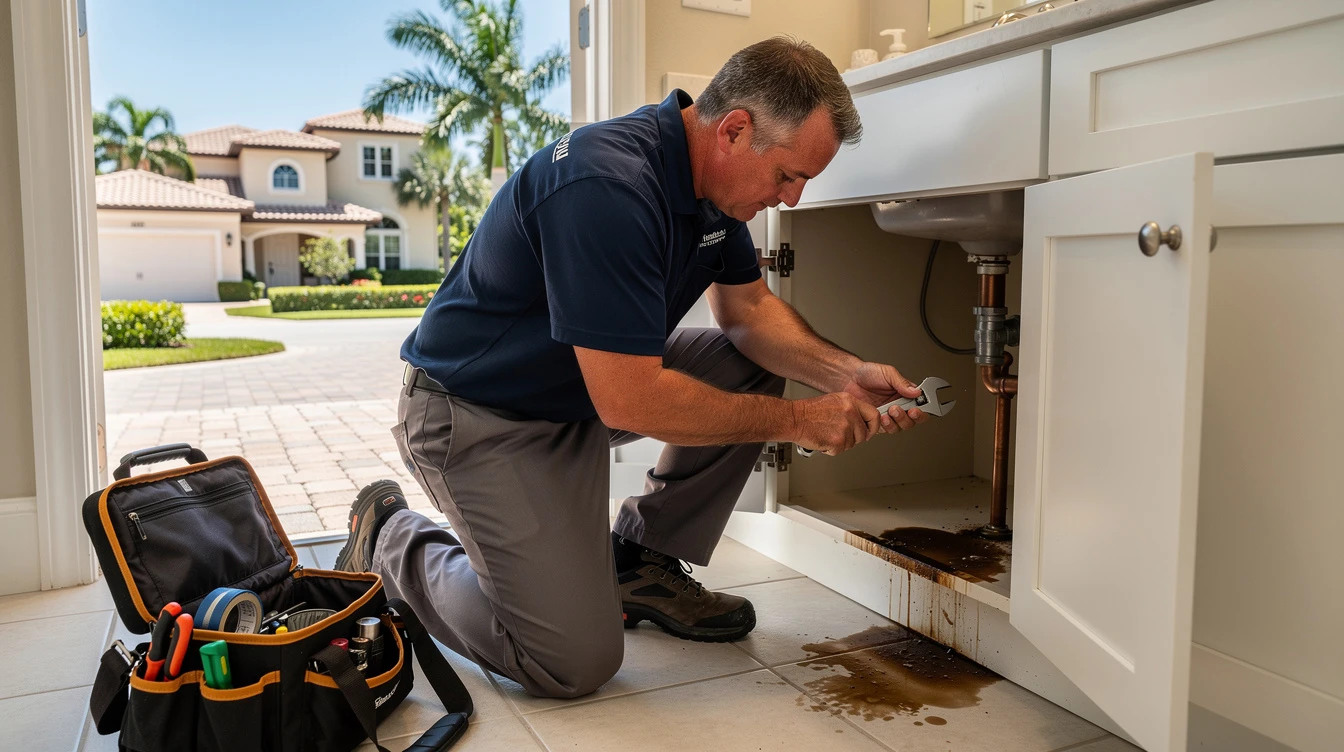
Why one locate costs more than another
Every property hides its plumbing differently, so no two detection visits price out the same. Here's what actually moves the number, explained plainly, with the final figure approved by you before anything begins.
Depth and location of the leak
A visible line under a vanity is a fast diagnosis; a leak beneath a poured slab under finished flooring takes longer to isolate with confidence.
Square footage and plumbing layout
A wide single-story slab home has far more line to grid-search acoustically than a two-bedroom condo unit.
Flooring material overhead
Natural stone, thick porcelain and layered subfloors all dampen acoustic signals and often push us toward a second confirmation method.
How many leaks are suspected
Older copper or galvanized systems frequently have more than one weak point, and each one needs its own locate.
Whether you need a full report
A verbal answer takes minutes, but an insurance-grade write-up with photos and imaging is more time on our end.
Access to the suspect area
Built-in cabinetry, furniture and tight crawlspaces all change how quickly we can read the spot in question.
Serving Palm Beach and Broward counties
Palm Beach County
North Broward
South Broward
Other work we take on
Whole-home repiping
When the locate turns up the third pinhole in two years, patching stops being the cheaper option.
See repiping →Emergency plumbing
If the hidden leak has already become water on the floor, that's tonight's call.
See emergency plumbing →Sewer line repair
For the wet yard patch that traces to the drain side rather than the supply side.
See sewer line repair →Water heater repair
The puddle near the tank that turns out to be the relief valve, not the slab.
See water heater repair →Cast iron replacement
When the moisture is coming from a failing drain line under the slab.
See cast iron replacement →What people say after we've been out
Our water bill nearly tripled and I braced myself for a torn-up living room. They grid-walked the floor with a listening device, found the exact spot near the hallway, and rerouted the line without touching a single tile.
Kendra T. · Boca Raton
There was a musty smell in the guest room for weeks with nothing visible. The infrared camera showed a cool patch behind the closet wall, right where a copper pinhole was hiding. The write-up they gave me made the insurance claim go smoothly.
Ignacio P. · Delray Beach
Two other companies told me they'd need to open up three different walls just to look. This crew pressure-tested, listened, and had the exact location marked in about twenty minutes. Fair price and no mess left behind.
Yvette L. · Deerfield Beach
A warm spot on the kitchen floor turned out to be a hot-water line running under the slab. They found it precisely, showed me the thermal readings, and explained the repair options clearly before we picked one. Honest work start to finish.
Adrian K. · Pompano Beach
Leak detection, explained
Can you actually locate a leak under my slab without cutting into it?
Yes, and slab leaks are the majority of what we're called out for in this region, since most homes here sit on a slab-on-grade foundation with water lines poured directly into the concrete. We use ground-contact acoustic microphones to hear the pressurized escape, then confirm with a tracer signal or thermal imaging depending on the flooring. A hot line leaking under tile often shows up as a warm patch that the infrared camera catches instantly. Once we've cross-checked the spot with more than one method, we mark it so the repair opening stays as small as we can make it.
Will you have to tear up my floor or wall to find the problem?
Locating the leak itself is entirely non-destructive. Acoustic, electronic and thermal methods all read through concrete, tile and drywall without cutting anything open. In the majority of jobs we identify the source with zero demolition, and only make a small, precisely placed opening when it's time to actually repair. That's a big difference from the old approach of opening wall after wall hoping to stumble onto the source by chance.
How close can you get to the exact spot?
On a typical pressurized supply leak we routinely narrow it down to within a few inches. Accuracy improves the more methods agree with each other: an acoustic peak backed by a thermal reading and a confirmed pressure drop leaves very little room for doubt. Thick slabs, dense stone flooring and multiple overlapping leaks make the search more involved, which is why we work the area methodically instead of taking a shortcut. If a reading ever comes back ambiguous, we say so plainly rather than open the wrong spot.
Can I use your findings for an insurance claim?
Yes. We put together a written findings summary that lists the location, the probable cause and supporting evidence, including photographs of our instrument readings and thermal images where applicable. Most adjusters want proof of where the water escaped and confirmation that the damage traces back to a sudden or concealed failure rather than long-term neglect. Having that documentation ready before repairs start tends to speed up the claim process considerably. Tell us about your claim upfront and we'll format the report to match what your carrier expects.
What actually determines what a detection visit costs?
The price hinges on how deeply the leak is hidden, how large and complex your plumbing layout is, what kind of flooring we need to work around, and how many separate leaks we suspect. A single accessible line under a cabinet is a quick job; a slab leak beneath natural stone in a large home takes considerably more time and equipment. Adding a full insurance-grade report with photos and thermal imaging adds documentation time on top of the locate itself. We walk you through all of that and give you a firm number before we start, and nothing moves forward without your approval.
Get a real answer instead of a guess.
Every day a hidden leak keeps running, it costs you more on the water bill and gives South Florida humidity another chance to grow mold behind your walls. Get a non-invasive locate and a documented report you can hand straight to your insurer if needed.
Call now · 24/7(561) 760-1677Licensed & insured · FL CFC1433655 · Boca Raton Emergency Plumbing SFL, 1220 Southwest 1st Way, Deerfield Beach, FL 33441 · Written findings report for your adjuster.